
Hospital maintenance and inspection programs work together to keep critical equipment reliable and building systems functioning without interruptions.
Regular inspections are a key part of preventive maintenance; they are a chance to confirm that assets are operating within safe limits and help you find potential hazards or issues before they escalate. Ultimately, that prevents small issues from turning into system failures that disrupt patient care.
Using a structured hospital maintenance checklist gives your team a consistent way to standardize the inspection process. This standardization reduces variability across departments, improves efficiency, and ensures your records are complete and easy to reference during audits.
This checklist outlines what technicians need to verify, how often tasks should be completed, and where documentation should live. Specific safety items have been included to ensure compliance with regulatory requirements.
Key takeaways
- Tailor this checklist to your facility, then use a CMMS to turn it into a repeatable workflow.
- Focus inspections on critical equipment, building systems, specialized clinical areas, workplace safety measures, and personal protective equipment (PPE).
- Prioritize high-impact assets and schedule preventive maintenance around clinical activity. Use historical maintenance data for better resource planning.
- Address high-risk areas first, then align inspections with maintenance schedules, assign clear ownership roles to each task, and train staff to report issues early.
- Use digital tools like a CMMS to centralize logs, streamline mobile inspections, automate schedules, and connect maintenance data with other hospital systems.
How to use this checklist effectively
This checklist works best when your team treats it as a living document.
Your facility management requirements, equipment mix, layout, and regulatory requirements will differ from those of other hospitals. So, start by tailoring each section to match how your facility operates.
The goal is to give your technicians clear, repeatable processes they can follow during every inspection.
Customize for your facility
Review the checklist against your current asset list and building layout. Add any specialized rooms, high-use equipment, or site-specific risk areas.
Then, confirm that the inspection frequency aligns with your OEM guidelines, internal policies, and accreditation standards.
Adjust checklist items as needed so each line reflects real work your team performs.
Use a CMMS
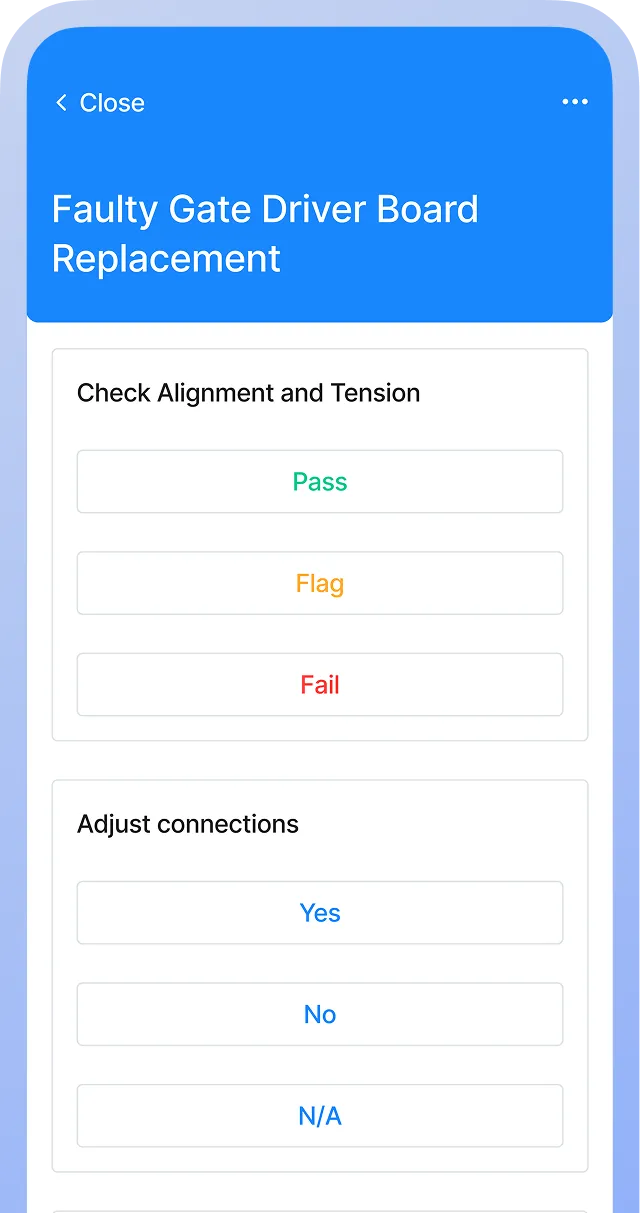
A computerized maintenance management system (CMMS) helps you turn this checklist into a step-by-step workflow for your team to follow. You can build each inspection item into a digital work order so your technicians see the exact tasks and any necessary notes right on their phones.
A CMMS triggers reminders and flags overdue inspections, so you can maintain compliance with hospital policies and accreditation standards.
Technicians can attach photos, log notes, and record any corrective actions they took. This gives you a complete history for every piece of equipment and makes audit prep easier.
Having all this data centralized also makes it easier to spot trends like rising failure rates or repeat malfunctions.


Core inspection areas for hospital maintenance
A strong hospital inspection program supports your overall maintenance strategy by verifying that critical equipment, building systems, and clinical spaces are functioning properly before small issues turn into failures.
These are the areas your team should review during every inspection cycle:
Critical medical equipment
Building systems
Patient and staff environments
Specialized areas
Medical gas systems
Emergency preparedness systems
Security systems
Water quality and safety
Waste management systems
Parking and exterior grounds
Documentation and compliance checks
*Disclaimer: This checklist is to be used only by those with appropriate training, expertise, and professional judgment. You are solely responsible for reviewing this checklist to ensure that it meets all professional standards and legal requirements, as well as your needs and intent.
How often should you inspect hospital equipment and systems?
There is no single inspection interval for every hospital asset. Record authorized pre-use checks separately from technical inspections, tests, and maintenance tasks, using each asset's documented requirements.
For U.S. hospitals subject to CMS hospital requirements, manufacturer activities and schedules are the starting point for medical and facility equipment. Qualified personnel should confirm eligibility before using an alternate equipment management (AEM) program. Some equipment, including imaging/radiologic equipment and medical lasers, is excluded. Follow applicable requirements and the activities and frequencies in the permitted program.
This content is for informational purposes only and does not constitute legal or compliance advice. Consult applicable regulations and a qualified professional to confirm your facility's current requirements.
What is hospital preventive maintenance?
Hospital preventive maintenance is work scheduled by elapsed time or equipment use to reduce deterioration and failures. Elapsed-time scheduling triggers maintenance at fixed calendar intervals, such as quarterly generator servicing, regardless of how much the asset has run. Equipment-use scheduling instead triggers maintenance based on actual operation, such as service hours logged on a ventilator or cycle counts on a sterilizer.
This differs from reactive maintenance, which addresses problems only after they cause a failure or downtime. Preventive maintenance aims to catch wear and degradation before an asset fails, which matters most for equipment where downtime directly affects patient care.
An inspection checklist records condition and safety checks that inform that work. Inspection findings may trigger follow-up repairs, but completing an inspection does not replace the other maintenance tasks required for the asset.
How to implement preventive maintenance at hospitals
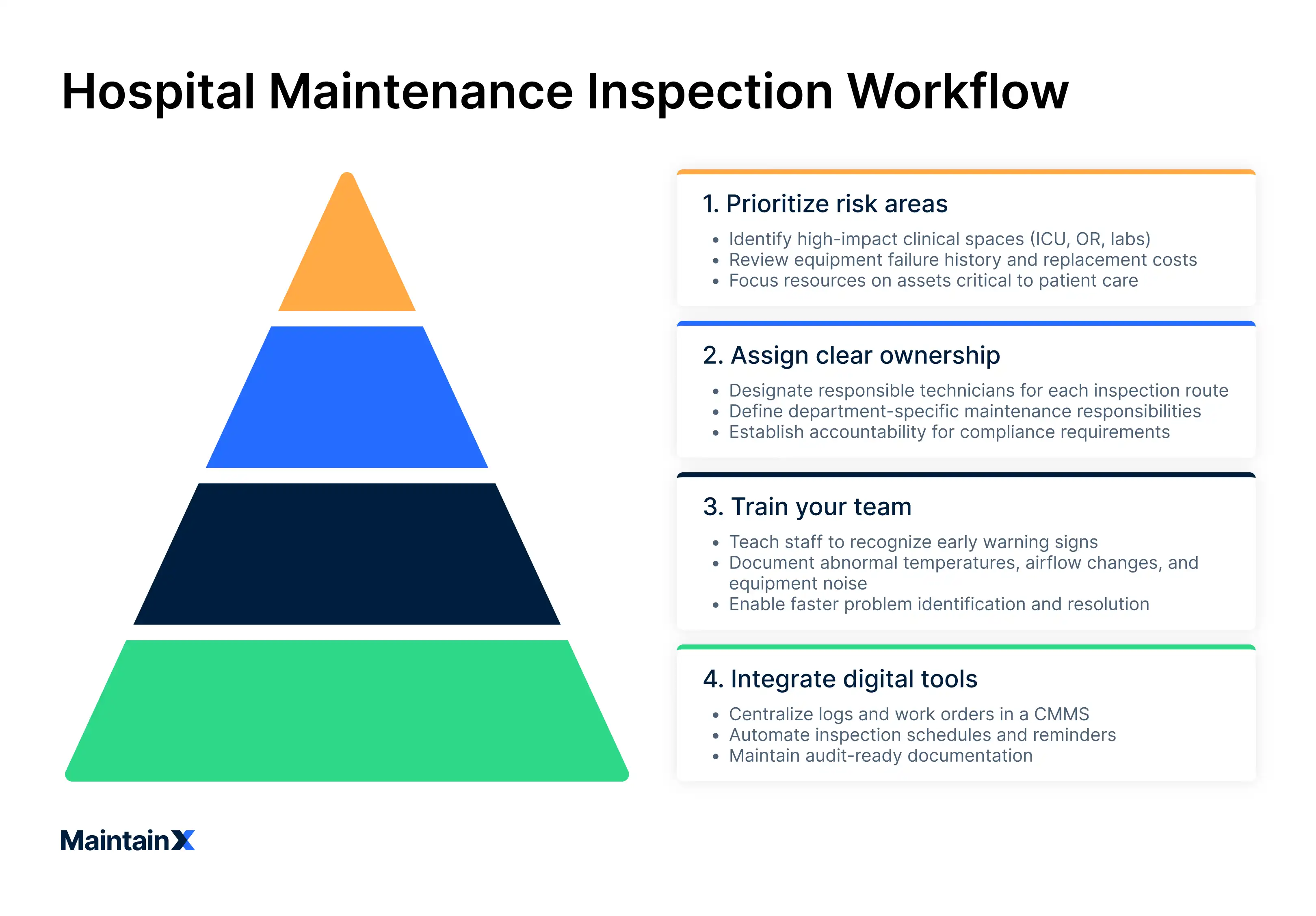
Follow these four steps to build a preventive maintenance program that sets responsibilities, documents required work, and focuses your team on the assets with the greatest consequences if they fail. Treat the sequence as a planning framework, then tailor each step to your equipment, teams, and facility requirements.
1. Prioritize risk areas
Start with assets serving critical spaces, such as the ICU, OR, and labs. Consider failure consequences and maintenance history, equipment use, and backup availability. Review replacement costs when allocating resources, and retain the assessment with the equipment record.
2. Assign clear ownership
Name a technician or team for each inspection route, identify the responsible department, and agree on who to contact about problems. In the MaintainX CMMS platform, assign the work order and link the relevant asset or location. Assign technical work only to appropriately qualified personnel.
3. Train your team
Train staff on the checks permitted for their roles, using the device instructions. For example, show them how to document visible damage and whom to contact. Keep evidence of training and competency assessment with the device records.
4. Integrate digital tools
Use a CMMS to keep asset information and service history together with procedures and work orders. Set dates and recurrence to match the approved schedule, and coordinate work with department leaders around clinical activity.
Best practices for hospital maintenance
These practices support the workflow above by keeping your maintenance program consistent, auditable, and grounded in what your team actually observes in the field. They work best layered on top of your existing inspection routes rather than as a separate process.
- Keep an inventory of equipment, responsible departments, required maintenance activities, and service histories.
- Before an audit, walk the inspection route with department leaders and compare the condition of items on your facility's approved checklist with the recorded findings. Document any gaps and assign follow-up through your facility's process.
- Record what your team checked and found, who took action, and any supporting photos or files. Use work order templates to keep routes repeatable.
- Review open findings with the responsible department and assign follow-up. Change inspection procedures only through your facility's approved review.
Together, these practices turn individual inspections into a program you can defend at audit and improve over time.
Digitize and streamline your hospital maintenance operations
Hospitals move fast, and when maintenance falls through the cracks, it impacts patient care. Your program needs tools that keep pace with clinical demands and a strict regulatory environment.
A CMMS like MaintainX centralizes your logs, work orders, and service histories, eliminating the headache of tracking binders and spreadsheets. Automated reminders keep inspection routes and preventive maintenance tasks on schedule, while mobile access lets technicians log notes and photos without returning to a workstation. This also improves coordination across departments, giving clinical leaders, facilities teams, and support services a shared view of open work, priorities, and equipment status.
Integrating your CMMS with other hospital systems connects equipment records to purchasing and financial information, giving leaders a clearer view of maintenance spending and replacement needs, while reducing downtime and improving patient safety across the board.
Use our downloadable hospital maintenance and inspection checklist as your starting point. Add it to your CMMS, standardize it across departments, and build a process that supports safer, more efficient operations.
You can also explore more examples on our Checklists and Inspections page.
Hospital inspection checklist FAQs
What is the main goal of hospital maintenance inspections?
The primary goal of hospital maintenance is to keep patients safe by ensuring equipment and building systems work as expected, and care areas are free of hazards.
Inspections help your team catch problems early, maintain compliance, and reduce unplanned downtime that disrupts clinical operations.
A missed equipment inspection can lead to disrupted care or trigger compliance audits. To avoid that, hospital maintenance professionals should use a structured maintenance checklist. A checklist will help your team stay ahead of breakdowns and keep essential systems operating as expected.
A hospital inspection checklist also keeps inspections aligned across departments. Your technicians can use it to maintain accurate records, reduce variability, and improve efficiency. It also lets you walk into audits with confidence because your documentation is complete, thorough, and easy to access.
How often should critical hospital equipment be inspected?
Use each asset's documented inspection schedule, including applicable manufacturer instructions and any stricter requirements. For hospitals subject to CMS requirements, qualified personnel should confirm whether an AEM program is permitted. The frequency section above explains the distinction between checks, inspections, and maintenance tasks.
Which hospital systems are most at risk if maintenance is neglected?
HVAC and clean air systems, emergency power, sterilization equipment, and life-safety systems carry the highest risk.
Failures in these areas can compromise infection control, delay patient care, and trigger accreditation reviews.
Can a CMMS help hospitals meet regulatory requirements?
Yes.
A CMMS centralizes inspection logs, service histories, readings, and corrective actions.
This helps your team collect and manage the information you’ll need to pass regulatory audits.
How do I prioritize inspections across multiple departments?
Start with risk. Focus first on areas tied to patient safety, infection control, or regulatory standards such as ICU environments, OR suites, pharmacies, and sterile processing.
Then layer on information you have about equipment age, failure history, and downtime impact to better understand which equipment within those areas needs high-priority attention. A CMMS makes this easier by showing overdue tasks, high-risk assets, and recurring problem areas.
What documentation is required for hospital audits and accreditation?
Auditors expect complete inspection logs, preventive maintenance records, repair histories, environmental readings, and equipment service reports.
They also look for clear evidence that technicians followed established procedures. Maintaining these records in a CMMS helps you retrieve what you need quickly and reduces audit prep time.

Marc Cousineau is the Senior Content Marketing Manager at MaintainX. Marc has over a decade of experience telling stories for technology brands, including more than five years writing about the maintenance and asset management industry.



.webp)